
New release from synth pioneer Giorgio Moroder – Racer
Listen to the new track from Moroder
Racer, which is the soundtrack to a Google Chrome racing app of the same name.
MR-808 – mechanic drum robot
Let’s get physical: MR-808 is the first drum robot that reproduces the drum sounds of the 80s – in the real world.
The robot installation MR-808 is a replica of the famous 1980s electronic drum machine TR-808 – with robots playing the drum sounds! I (Moritz Simon Geist) have been playing electronic music for several years now, and at some place I was bored of the electronic music production process. With binary logic, everything is possible.
So I decided to go back to the roots of sound generation – the physical sound generation – but combine it with the electronic music structure we like so much.
I liked the idea so much, that I couldn’t stop building my own drum robots, and ended up replacing all the electronic sounds of a whole drum computer, placed in a 3,3 x 1,7m² case. I am very proud to present the “MR-808” – a mechanic replica of the famous 1980s electronic drum machine TR-808!
Read on: sonicrobots.com/mr808-eng/
—
MR-808 – mechanic sound robot (all drums, miced)
A mechanic relay controlled via arduino (bass sound)
Gameboy – Arduinoboy hardware (8 bit chiptune sound)
Everything was programmed in Ableton, only equing and compression has been applied.
—
Filmography: David Campesino
Music: Moritz Simon Geist
PPG WaveMapper Tutorial From Wolfgang Palm
Creator of the PPG and Wavetable synthesis, Wolfgang Palm, gives an editing tutorial for WaveMapper users.
PPG WaveMapper is the second next-generation iOS based synth from Wolfgang Palm, who in 2012 released the PPG WaveGenerator to critical acclaim from both press and public.
In final development the PPG WaveMapper offers iPad users a second synthesiser to compliment the already loved PPG WaveGenerator from Wolfgang Palm. PPG WaveMapper allows the user the opportunity to create limitless sounds from this unique and powerful new technology.
PPG WaveMapper features the Sound Map, which maps the various sounds in a way to easily access and experiment with them, more importantly the PPG WaveMapper features a new synthesis system which maps the waveforms of a sound into a new kind of wavetable which preserves the sound characteristics better than classic Wavetable synthesis and at the same time allows for the manipulations which make WT synthesis so unique.
The Mapping window is the visualisation of a pool of programs on which “modules” float. Those modules represent certain parameters of the synthesiser engine and each module can be placed on one of 32 programs. The moment an item is placed on map then the parameters of that module will take on the settings of those parameters in the underlying program on the Mapping window.
People who do not posses synth-programming skills can use this mapping technology as a starting point to create complex sounds. For example a user can drag a string sound source onto a drum envelope, or a guitar sound onto a string envelope – the concept is simple, yet incredibly powerful.
Power users can delve deep into the back end of any sound using a full set of professional features;
▪ New Sound map concept – create new sounds playful and experimental
▪ 3 types of synthesis – the optimal type for kind of each sounds
Classic wavetables – for the typical PPG sounds
Time compressed samples – more authentic sounds, allowing analysis of user samples
Pure samples – classic sample playback
▪ Analyzer – convert your own samples into the new format or into wavetables
▪ 3 oscillators capable for totally independent sound sources
▪ 90 sound resources – a huge sound palette, from real instruments to abstract wavetables
▪ 4 parameter editor pages – comfortable and detailed access to all the parameters
▪ 3 Noise generators, for audio and modulations
▪ Ringmodulator
▪ Classic 24 dB Lowpass Filter, combined with an overdrive simulation.
▪ Dual amplifier, for versatile control of 2 audio signals as well as panning.
▪ 13 Envelopes, for independent control of pitch, waveform, filter and noise
▪ Gain and panning
▪ 4 LFOs – with 5 waveforms
▪ Delay/Reverb effect
▪ Arpeggiator
▪ Schematic touch keyboard – Build your own keyboard, with the keys
you prefer for your music.
▪ Powerful sound browser – sorting by category, bank management
▪ Virtual and Hard-MIDI in/out – sending/receiving keys and controllers.
▪ Audiobus support.
▪ 10 min audio recording and Audio copy.
The Roland Juno-6: VCF
Here is a demonstration of the sound and functionality of the Roland Juno-6 voltage-controlled filter.
OMD – Dresden [Official Video]
New video from OMD, details below:
Dresden is out on May 20th and is from our new album “English Electric” Out Now
Dresden is available on a limited edition CD format exclusively available from our website only:
http://omd.firebrandstore.com/omd-dre…
As well as iTunes and digital store
Super Synthesis’ “Super37” Powered Euro Case and Keyboard
Switched On is now carrying the Super Synthesis “Super37” powered Eurorack modular case and keyboard. Simply plug in a custom array of Euro modules and build your super synth. The keyboard feels excellent to play and is velocity sensitive, it’s very portable, and it has midi out. The onboard midi sends out polyphonic data as well!
It includes one module that allows for switching octaves, velocity out, trig,gate, and of course volt per ocatve out. The modules single LED bulb also indicates the amount of velocity being sent from the keyboard by how luminous it is. And last but not least it can slew voltage from the keyboard to create glide effects.
It features 104HP of high quality Tip Top Audio Z-rail space, includes a Tip Top Audio powersupply, and has a well crafted aluminum chassis with stained wood sides.
They are made by Super Synthesis in our hometown of Austin, TX and we are pleased to be carrying them.
Read more about the Super37 and purchase HERE.
http://www.switchedonaustin.com
Animoog on Blackberry
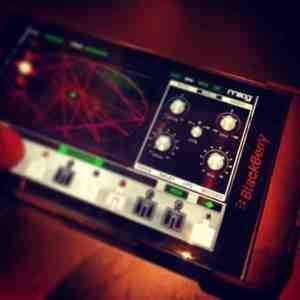
Blackberry has announced that Moog is now official on the BB10 platform
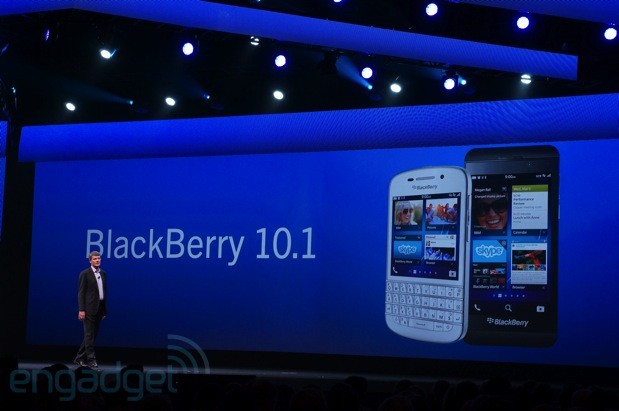
Amongst the flurry of announcements this morning at BlackBerry Live in Orlando, CEO Thorsten Heins finally made good on an app promise from this past January. Yes, Skype is now available on the Z10. Users that want to make VoIP calls will have to upgrade to the latest iteration of the platform, BB10.1, in order to download the preview from BB World. Additionally, Heins also told attendees that Moog will be bringing its synthesizer app Animoog, previously exclusive to iOS, to the BB10 platform starting today. So, slowly, but steadily BlackBerry’s following through on its vision to make BB10 a robust developer-friendly OS.
Using MIDI Hardware with Reason – Micro Tutorial
More info on Reason: https://www.propellerheads.se/product…
The Reason Rack offers nearly endless sonic capabilities. But what if you just want the sound of your favorite hardware synth? Or that weird little drum machine you got half-price. In this tutorial we take a look at the External MIDI Instrument and how it can help you expand your Reason rack with your hardware.
Experimental: Bonus Table 571
Bonus Table 571 is a collaborative experiment in joining science, design and music. This project is part of Reclaim NYC’s Collaboration show happening during NYCXDESIGN 2013.
Pure tones tuned to the natural resonant frequency of the wood result in vibrations, determined by the tabletop’s size shape and density. The vibrations reveal a geometric pattern inherent to the wood.
The resonant pattern is etched away by an enzyme cocktail tailored to the molecular structure of the wood. This process is similar to acid-etching a metal plate, such as in printmaking. The difference is that this is based on a live process; using enzymes derived from forest floor microbes.
This piece is auto-collaborative, in that its design elements are defined by interactions between its components and their inherent properties: The dimensions and density of the materials determine it’s resonant frequency which informs the pattern to be etched, and the makeup of the wood itself determines how deeply the enzymes etch into the wood.
Bonus Table 571 is a collaboration between Colleen & Eric Whiteley, Loe Hubbard scientist/bioengineer and Ben Cameron musician/sound designer.
Daft Punk – Tron Legacy End Titles – Korg DS-10+
Background video description:
And finally, there’s my version of the End Titles of Tron Legacy remade completely in a Nintendo DSi with Korg DS-10+ software. The audio was just recorded in DAW without post processing or effects adding.
Sorry for the mistakes while I’m playing, those keys are very tiny ahahaha.
Thanks for watching!!!
DATAMASKIN

