
Brand new stuff from Ultraίsta – “Bad Insect”
Here’s the video for Ultraista’s, “Bad Insect” balancing glitchy visuals over a glittering, shimmering melody. “Bad Insect” is the debut single from Ultraίsta, the multimedia trio comprised of vocalist/artist Laura Bettinson and multi-instrumentalist/producers Nigel Godrich and Joey Waronker.
Founded in London in 2011 on a mutual love of Afrobeat, electronic and dance music, visual art and tequila, Ultraίsta will be putting out their first LP on October 15th, 2012.
Pre-order here!
www.ultraista.co.uk
Serge TKB Controlling Oberheim SEM and Moog Voyager
Routing separate sequences to separate analog synthesizers in different formats the Serge tkb oversees all control voltage tracking tasks. These sounds were created and tweaked live.
Additional info about the Serge:
A few words about Serge sequencers. Note that Serge/Sound Transform does not make a traditional keyboard like you see on most other synthesizers, such as Moog, Roland, etc. You can get a traditional vintage control voltage keyboard (Roland, Moog, Polyfusion, etc.) and interface it to the Serge, since the Serge adheres to the 1 volt/octave standard. Or you can generate a control voltage from your MIDI keyboard and an interface.
Sound Transform follows the Buchla model of offering a touch sensitive keyboard/sequencer unit, as well as more traditional simple sequencers. Originally, they offered a sequencer whose stage was selected by push buttons. This is what’s called a sequencer-programmer: you could use it in an automatic mode as a traditional sequencer, or use it manually to select/program voltages you set. So you can mimic a traditional keyboard if you want by tuning each stage to various notes. Or discard the traditional keyboard concept and simply use it to fine-tune different parameters in your patch for later recall.
The TKB is the hub of the sequencers – each stage has a corresponding output that goes high when it’s selected. This complements the other sequencers, which have an input that, when high, causes that stage to be selected. So the TKB can be used to control another sequencer, or whole sets of other sequencers, regardless of the number of stages they might have.
Sound Transform offers a set of Serge sequencing programmers, from four to eight stages, plus the Sequencer with eight stages, and the TKB with sixteen stages. Confused? What they call their regular Sequencer is not a sequencing programmer in that each stage is selectable by a button but not by a stage select input. The sequencing programmers have stage select inputs. And the TKB has stage select outputs.
The sequencers are a little ‘bare’ in that none of them have an internal clock. You must use another module as a clock source, and typical sources are the DSG, DTG, and the Smooth section of the SSG, patched to oscillate. But they do have cute features such as step trigger inputs for RESET, UP/DOWN, and HOLD.
Most of the Serge sequencers are optionally available with an internal connection to a quantizer. Why would you want that? The quantizer forces the range of the stage pots into stepwise note intervals. So as you turn the pot, it isn’t a continuous rise or fall, but steps up and down a scale. This makes tuning much easier and more reliable. The variable outputs are still available on quantized sequencers also.
New music video from The Presets – Ghosts
‘Ghosts’, the new single by The Presets. New album ‘Pacifica’ is out September 7 [AU] / 10 [US] / 16 [GB] Modular Recordings.
Video directed by Abteen Bagheri [ http://abteen.org/ ]
Buy the song, out now on iTunes: http://smarturl.it/ghosts
Pre-order Pacifica now:
Presets Official – http://pacifica.thepresets.com/
New gear from Roland announced – MIDI keyboards and Synth modules
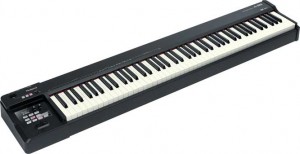
Roland has announced the A-88 and A-49 MIDI Keyboard Controllers, two all-new controllers that combine pro playability with mobile convenience. The piano-action A-88 and synth-action A-49 feature high-quality keyboards along with a slim, light design that’s ideal for today’s on-the-go musicians. They also offer USB, MIDI, and Apple iPad compatibility, as well as onboard control of Roland’s SuperNATURAL-powered synths such as the INTEGRA-7, JUPITER-80, and JUPITER-50.
There’s no shortage of keyboard controllers on the market, but most have playability that’s far below the quality found in high-end digital pianos and synthesizers. With the A-88 and A-49, Roland is pleased to offer keyboard controllers that play like pro-level instruments, giving musicians mobile convenience with no compromises. From the bedroom studio to the big stage, these controllers truly deliver inspiring playability and top-level performance.
The A-88 features 88 full-size weighted keys and Roland’s acclaimed Ivory Feel-G Keyboard with Escapement. This is the same Progressive Hammer Action keyboard found in many Roland stage and home pianos, and allows users to play software-based pianos, soft-synths, and sound modules with an authentic grand piano touch. In addition, the white keys are built with a moisture-absorbing material that replicates the feel of real ivory. Even with its premium hammer-action keyboard, the A-88 is light, portable, and easy for gigging musicians to transport.
Born for mobile use, the A-49 features road-tough construction yet is extremely lightweight (under six pounds). The 49 full-size velocity-sensitive keys have a rounded shape for a comfortable touch, along with many enhancements to reduce noise and increase playability. All these features add up to a premium keyboard that even the most discerning pros will appreciate.
Both the A-88 and A-49 include many performance features, including a pitch bend/mod lever, D-BEAM controller, user-assignable knobs and switches, and OCTAVE and TRANSPOSE buttons. The A-88 also has DUAL/SPLIT, UPPER, and LOWER buttons for splitting and layering tones on its full-size keyboard.
The dedicated SuperNATURAL mode button on the controllers unlocks a host of unique sound-selection features when connected to a Roland SuperNATURAL instrument such as the new INTEGRA-7 sound module or the JUPITER-80 and -50 synths.
The A-88 and A-49 offer USB and MIDI OUT connectors, along with jacks for connecting optional expression and hold pedals. Both controllers can be powered via a computer’s USB bus, while the A-88 can also be powered with an accessory AC adapter. Additionally, the A-49 and A-88 are three-OS compatible, with Mac and iOS music apps on the iPad via Apple iPad Camera Connection Kit, and a SONAR X1 LE DAW software bundle with both controllers, giving Windows users a ready-to-go music production environment.
The A-88 and A-49 come standard in a handsome black finish. The A-49 is also available in white, a perfect companion color for users of the white-finish iPad.

Roland says that, wth the development of SuperNATURAL sound and Behavior Modeling technology, they have blurred the boundary between acoustic and electronic instruments. Built upon these core technologies, they tell us that the new INTEGRA-7 gives musicians a gold mine of the latest SuperNATURAL sounds in a fast-access, fully stocked 16-part module. The powerhouse rack comprises a “greatest hits” collection of sounds from Roland’s flagship keyboards and V-Drums modules, plus a coveted lineup from the legacy SRX library. It also introduces a new technology called Motional Surround, a 17-part ambience engine that lets you graphically control the distance and position of each part within 360-degree sound field.
“With the immense power of the INTEGRA-7, you can create amazingly realistic and detailed orchestral arrangements, immersive, spatial sounds, and beyond.”
Features
- Flagship synth module with over 6,000 sounds built in
- The latest SuperNATURAL sounds with enhanced Behavior Modeling technology for expressive acoustic instruments and accurate reproduction of performance articulations
- Powerful SuperNATURAL synth engine with fat analog synth models and vintage filter types
- Dynamic SuperNATURAL drum engine with natural tonal change derived from Roland V-Drums
- Producer’s “must-have” SRX Expansion sound library built in; all 12 SRX titles included
- Dedicated multi-effects and EQ for each part (16 parts), plus dedicated COMP+EQ (use six simultaneously) for drums and ambience parameters for SuperNATURAL drum kits
- Innovative 17-part Motional Surround ambience engine for stereo, headphone, and 5.1-channel output
- INTEGRA-7 Editor for iPad and Motional Surround VSTi Editor for SONAR software
Kraftwerk: Publikation – Biography by David Buckley
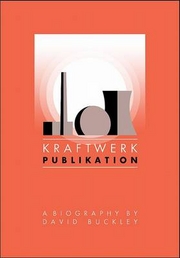
Omnibus Press presents a new and major biography of the first-ever all-electronic pop group, Kraftwerk, one of the most influential bands in popular music history. David Buckley examines the cult enigma that is Kraftwerk! The inner workings of this most secretive of bands are revealed through interviews with friends and close associates. The story of their incredible impact on modern music is traced up to the present day using interviews with a host of musicians, from original electro pioneers such as Gary Numan and the Human League to contemporary acts still in awe of the original Man Machines.
3.5 ‘Tomorrow Belongs To Those Who Can Hear It Coming’
It wasn’t just young would-be musicians who were listening either. The old guard were listening too. In 1975, modern music’s most important icon, David Bowie, was listening hard to Kraftwerk. Receiving an endorsement from Bowie, at the time the most innovative and critically lauded rock star on the planet, was a big deal. It’s hard now to imagine how influential David Bowie was in the seventies and early eighties. Far and away the most sought after interviewee by the UK music press, his every move was scrutinised, his every word picked over by an adoring audience.
Not that 1975 was personally a good year for Bowie. Commercially, he had never been more popular. ‘Fame’, an unlikely collaboration with John Lennon, became his first US number one, and a re-released ‘Space Oddity’ from 1969 would top the UK charts later that autumn. But physically and emotionally, Bowie was a man of shellac, ready to shatter into pieces, addicted to cocaine and obsessed with the occult. However, amongst the nonsequiturs and ridiculous assertions in his interviews, Bowie was, once again, picking up on a massive shift within modern music. He felt that rock, as a statement, was over. His music of the time, dubbed by its creator ‘plastic soul’, was his first attempt to break free from rock cliché. His second attempt, more fully realised, and much more artistically successful, would be just around the corner. ‘Rock ’n’ roll certainly hasn’t fulfilled its original promise,’ he told Anthony O’Grady in August of that year. ‘The original aim of rock ’n’ roll when it first came out was to establish an alternative media speak voice for people who had neither the power nor advantage to infiltrate any other media or carry any weight, and cornily enough, people really needed rock ’n’ roll. And what we said was that we were only using rock ’n’ roll to express our vehement arguments against the conditions we find ourselves in, and we promise that we will do something to change the world from how it was. We will use rock ’n’ roll as a springboard.’ Bowie continues: ‘But it’s just become one more whirling deity, right? Going round that never-decreasing circle. And rock ’n’ roll is dead … It’s a toothless old woman. It’s really embarrassing.’
Akai S1000 – ROM waveforms and the four factory disks
The internal waveforms of the Akai S1000 and the first four disks of the Akai SL library. Reverb from the Lexicon 200.
Description of the Akai S1000:
An oldie but a goodie. Akai’s great sampler of the late eighties! It actually still stacks up pretty well even today! A 16-bit, 22kHz to 44.1kHz sampler with 2MB to 32MB of RAM. Editing and programming the S1000 is a very good precursor to the advanced S3000 series. There are lots of advanced edit capabilities for looping, truncating, sample merging, time comp/exp, tuning and even analog-like parameters to control its filters and envelopes. Individual outputs for each of the 16 voices, stereo mix out, stereo input, MIDI, and trigger inputs round out this machine as a professional vintage-status sampler that still proves to be very useful even today!
Oberheim Xpander switched on Bach (Xplorer editor)
Oberheim Xpander playing the Toccata and Fugue in D minor, BWV 565,Johann Sebastian Bach (MIDI sequence).
Starting from the default Oberheim patch, this patch was made with the Xplorer editor, a real time editor for the Oberheim Xpander and Matrix-12.
You can download the sysex of this patch here: http://xplorer.programmer.free.fr/bb/viewtopic.php?id=15
More info about the Xplorer editor: http://xplorer-editor.com
Kraftzwerg Speak – Suspense
Background information on this video featuring the awesome Kraftwerg synth
Welcome to the first part of my new series called Kraftzwerg Speak. All the sounds you’ll be hearing in this series are created exclusively on the MFB Kraftzwerg semi-modular analog monophonic synthesizer. This series will be all about creating unique and interesting sounds. If you want to hear music produced by this synth, check out my Kraftzwerg Trance series.
Jiggery-Pokery Shelob Audio Bypass Splitter – Rack Extension for Reason

Jiggery-Pokery has announced the release of its Shelob Audio Bypass Splitter, “”Super-Spider” audio/CV routers Rack Extension for Propellerhead’s Reason.
Not your typical, common-or-garden Spider, “Shelob” is the first super-arachnid for Reason: a 4-in/20-out audio splitter. Each channel features one stereo in and five stereo outs: a pass-through, plus four independent splits. All outputs feature an off/on toggle switch and visual feedback of channel activity.
Shelob Audio Bypass Splitter features
- Three-mode fade-time adjustment—Instant, Linear fade (1-100ms), Analogue-modelled CF fade (100ms-20s).
- Stripe input mirroring—Auto-route an incoming signal to the next available channel/s.
- Four separate stereo audio splitter channels—Four input channels each with four alphabetically-named splitter sub-channels; All the sub-channels are independently switchable.
- Passthrough/Group On-Off switch—Use a channels Pass output jacks as an additional “dry” output, and the Pass switch to select between either the split signals or the dry signal. Leave the pass jacks unconnected and use the Pass switch itself to turn the whole channel on and off.
- Grouped splits—Use multiple “Shelob” channels to create groups of effects.
The Shelob Rack Extension is available from Propllerhead Software for 7.50 EUR.

PPG WaveGenerator iPad App – Show And Tell
Wolfgang is back sharing more of the wholesome goodness found in his new baby PPG WaveGenerator App.
The PPG WaveGenerator comes with a multitude of wavetables. The sound material contains the typical sounds from the original PPG wave models, as well as many new sounds generated by versatile analysis tools and also hand edited waves.
This app enables the user, to create his own wavetables in a playful way, and to hear the result immediately. Also you can construct the waves by adding harmonics very precise. Another way is to transform a picture into a wavetable. You can load photos from your album or even shoot a picture with the camera.
The waves are collected in a grid of 256 fields, to which the 3 oscillators of the synthesizer have arbitrary and independent access. In a 3D display you get a visual impression on how the sound evolves. You can turn around the 3D object and zoom in and out, The Parameters of the synthesizer are divided into modules, which allows easy, yet powerful editing. It contains 3 oscillators with independent control of pitch and waveform. Each oscillator has its own glide, which gives a very dynamic sound.
With a sophisticated routing system, the diverse modulation sources can be connected to all important control points. The keyboard is configurable totally freely, so you can setup all well-known musical scales, but also all imaginable custom scales that best fit into your music. PPG WaveGenerator benefits all advantages of the iPad, like X/Y control after the key on event, or two finder gestures for spectrum control. After a key is hit, the tone may be modified and modulated in various ways, just by moving your finger.
A comfortable browser lets you sort the sound programs; you can categorize and rate them. Also complete custom sound banks may be created. All significant parameters are controllable via MIDI. There is a built in context specific help for all pages and modules.
DATAMASKIN

