
New video from Ghost & Writer – Man On A Wire
Ghost & Writer – “Man On A Wire”
From the album “Shipwrecks”
Released by Dependent in 2011
Video clip by llamorte
Ghost & Writer – “Shipwrecks”
It feels like an eternity since Jimmyjoe Snark III, at that time still using the moniker of The Weathermen , exploded onto the EBM and New Beat scene with the track “Poison”. Singer Frank Spinath, on the other hand, is known for his comparatively more recent projects Seabound and Edge of Dawn, both huge hits in among electro fans. Spinath managed to persuade Jimmyjoe to collaborate, and the result of their efforts is finally here. Together they constitute “Ghost & Writer”, whereas they do not really give away, who´s the Ghost and who´s the Writer.
From the promo video clips, it’s clear that the duo share a weakness for black-and-white films, whose aesthetic matches up perfectly with the stories of Ghost & Writer. In their own words: „our songs are like short films. Like the characters in a film noir, the protagonists in our songs are often fighting a losing battle because they romanticize too deeply that which they cannot have, and so they collapse. Or they are fleeing from that which they actually desire.
Musically the album is characterized by a certain effortlessness, like old movie theaters or carousels. It resonants with both a playfulness as well as with a deep romantic desire.”
Snark and Spinath give conventional songwriting the cold shoulder and turn instead to brazenly modern structures as well as beloved yet nearly forgotten retro-elements, or as they put it: „Mean little stories blown up to cinematic proportions. Stranded and battered electronic memorials of better days. And yet, so fresh it almost hurts.”
Seldom has the combination of old and new born such creative fruit as on Ghost & Writer’s debut LP “Shipwrecks”. Breaking further new ground, the 8-track album also includes 8 re-workings of the songs by other artists — serving as its own remix album. Artists such as File Not Found, Edge Of Dawn, Diskonnekted, Iris and Acretongue have given the tracks their personal touch. In particular, the mix by electroclashers File Not Found looks likely to have good chances in the clubs.
The highly professional recording was mastered by none other than Front 242’s Daniel B., bringing out the fresh, new, and unconventional accents of an album sure to stand out in 2011’s otherwise rather sedentary electro landscape.
More information and order: www.dependent.de
The Mini Moog Synthesizer with Herb Deutsch
Herb Deutsch, the co-inventor of the first Moog synthesizer discusses the history and functions of the Mini Moog as well as its impact on the music of the time. Deutsch also plays one of his original jazz fusion pieces.
Though its design impacted the industry in a way that set the stage for all the synthesizers that came after it, the Minimoog is probably most famous for its excellent analog sound and arguably the best filters in a portable synth. It featured three oscillators (one of which can be used as an LFO) that could be individually tuned and offered multiple waveforms. The Minimoog is monophonic (only one note can be played at a time) so the three oscillators allow for an incredibly rich sound – three de-tuned oscillators each playing a different waveform can create some pretty thick analog sounds! There are also some very cool modulation possibilities when using one of the oscillators as an LFO.
But you can’t talk about the Minimoog without mentioning its filters. The Minimoog uses a 4-pole (24 dB/oct) low-pass filter with cutoff, resonance, ADS envelope, and keyboard tracking controls. Amazingly, Dr. Moog’s filter design has yet to be surpassed by a better sounding filter. It’s a filter that sounds so warm and smooth that Moog’s rival, ARP, tried to copy it for their 2600 and Odyssey synths.
The Minimoog’s internal wiring configuration and front panel layout has defined the general synthesizer configuration for decades. Every adjustable parameter is so clearly laid out on the front panel that the Minimoog makes a great teaching tool for anyone interested in classic subtractive synthesis. It even has a built-in A-440 tone generator so you can manually tune the oscillators-which is nice since (like mosts analog synths that heat up) the tuning of even this machine can be a little bit unstable. Though input jacks allow you to run your own external audio through the Minimoog’s filters, modulation and amplifier circuits too!
Directed by Michael Sterling
Linear Phase EQ in FL Studio
Download the project here – http://forum.image-line.com/viewtopic.php?p=646813#p646813
Steve Lawler on Dark Pressure
DJ/Producer Steve Lawler (VIVa MUSiC, UK/Ibiza) puts several of his exclusive patterns from the Dark Pressure Maschine Expansion to use in the studio and the club. All of the grooves heard in this video are from Dark Pressure.
http://www.native-instruments.com/darkpressure
DARK PRESSURE focuses on percussive one-shot samples and a wealth of exclusive pre-programmed patterns – many created by Steve Lawler himself. Fine-tuned for powerful club sound systems, DARK PRESSURE puts an impressive array of four-on-the-floor rhythms at your fingertips – from full-on energy to hypnotic groove and triplet-driven swing.
This is also the first MASCHINE Expansion to include pre-sliced percussion loops (64) for instant remixing. These loops are a source of inspiration when you’re composing, and a great way to apply some additional layered rhythms to your productions.
Exclusive interview with Harald Karla – the Reason Refill maestro at Soundcells
Steelberry Clones got an exclusive talk with the critically acclaimed Reason Refill producer Harald Karla at Soundcells. Soundcells has been active for a long time in developing quality Refills for Propellerhead’s DAW Reason, many of which has been featured and reviewed on this blog. Soundcells’ Reason Refills covers most angles of electronic music – featuring everything from 8-bit / chip tune type sounds to high quality emulations of classic analog hardware synthesizers like Moog Source to the KORG MS-20, but also a vast amount of very complex ambient pads that would fit any sci-fi movie on the planet. We at Steelberry Clones are happy users ourselves of Soundcells ever growing library of Reason Refills and therefore we thought it about time to dive a little bit deeper into the minds of Soundcells by asking Harald Karla who founded the company in 2008 all those questions that make up the unique sounds of the Soundcells’ Refills. Harald Karla have worked as a successful freelance sound designer for quite some time but is now focusing on Soundcells full time.

You can visit Soundcells webshop via this link to find out more about the various Reason Refills of Soundcells or simply use the Soundcells banner in the right hand side column to explore further >>>>
You have been active making Reason Refills for a long time – where do you find your inspiration
First and foremost, Soundcells ReFills are products that meet my personal taste. And that is an inspiration and first of all motivation – not just to create a product that the market demands immediately, but to follow your own preferences. Since I prefer to be within Reason, I’m trying to do everything possible there, of course. Also this is the reason for the content of the ReFills. The more I can put in a single environment – the more energy, concentration and creativity remains for the music …
When producing the Refills you often stay true to the original analog synths, for example the MS-20, how do you go about re-creating these sounds
Well – actually that is not my intention to emulate certain classics – it’s more the intention to preserve the typical sound characteristics. “Analog Signature” for example is a ReFill, essential to sample those classics – which thus serve as a sound basis and shaping the sound of the ReFills. In this ReFill the analog sound-feeling is in the foreground, and therefore the sampling here was comparatively expensive: In order to have vibrant aesthetics of sound each individual note is played three times and recorded. The capabilities of the NNXT sampler can be heard by repeating a note played on the same sample twice in a row …
The result is a vivid sound that raises a very analog feeling. One should not forget that real analog sounds are not only created by “fluctuating” oscillators, but also generated by other components such as filters, envelopes, modulations of various kinds. And here some analog synthesizer sounds incredibly strong, which can not be done simply by multi-sampling individual notes … At this point, it simply ends the emulation. If you wanted to create the typical sound with all its inaccuracies of the original, it would ultimately imply sampling note for note – very expensive and a different topic …
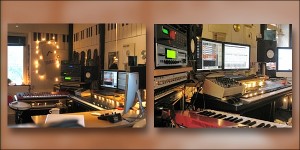
The Soundcells studio
We know of you as a high-end producer of Reason Refills and more, but can you tell us a little more about your musical background
A story of many – I had a very early interest in the creation of sounds, and in the beginning I did experiment with various instruments, but very early on I ended up focusing only on electronic instruments. From the time of the summer jobs I put all my money in (initially) keyboards, then synthesizers, drum machines, mixers, effects, etc.
I have never taken any lessons. The keyboard I’ve taught myself and I have always played by ear. Over the years I have dealt extensively with many types of music and electronic sounds, later on I started to create backing tracks to produce dance music with DJs, etc. … – And then finally spent all my time in music. Basically, the years were something of a “full study,” which continues to this day … : 0)
Read the full interview here >>
Wasp Special Demo
Nice demo of a really rare synth – the WASP:
“Here’s a little demo of my old Wasp Special vintage mono synth from the 1980’s. I’m trying to use all of the knobs to show they are fully functioning. This is a rare model of Wasp with a real wood case. It is serial number 00015 which suggests it was one of the first built. I’m using a modified Epiphone Valve Junior amp to play it through. The sound is being picked up by the built in mic on the Vado camera I’m filming with so the sound reproduction isn’t great. I hope you find the video useful. I will be parting company with the Wasp soon.”
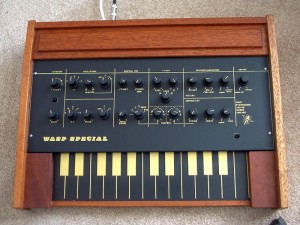
Here’s some more details about the WASP:
The Wasp Special is a bizarre monosynth from the late 70s. What an absolutely nasty-sounding synth. It’s easy to love it! ^_^
The Wasp’s filter design “abuses” digital inverters as if they were analog op-amps, leading to distortion, “grunge” and other “nasty” artifacts that define the specific sound of its filter, available in LP, BP and HP flavors…yummy.
The “Special” is a second-generation Wasp from the mind of Chris Huggett, progenitor of the OSCar synth. This one eschews the awful molded-plastic case of the original Wasp for a classy wood chassis but keeps the touch-sensitive keyboard. Surprisingly for something with digital components in the signal path, this is one of the warmest, phattest, dirty-ass synths I have ever heard or played.
The touch keyboard is nowhere near as bad as I feared as it is a capacitance design instead of a crappy membrane! Very easy to get bizarre glissandos and pitch sweeps. Triggering is suprisingly rather accurate. Takes a bit of getting used to, though if you’ve never played a touchplate or capacitance keyboard.
I had to apply a bit of TLC before this one sounded very good, it wasn’t in too bad shape for around 27 years old. A little touch-up on the woodwork…It was a little dinged-up when I got it. Also, it needed some interior work with a soldering iron to get it back to “new” condition electronically – one leg of a cap had come loose from the board, some pots needed serious cleaning and I had to re-mount and re-solder a footage selector switch that had cold solder joints, causing Osc 2 to drop out occasionally. Physically its pretty solid now. I imagine the build quality of the first-gen plastic jobbies was rather “iffy”, at least people have said so…I think I was very lucky to get a post-EDP model.
There’s quite a lot of knobbage for such a “simple” two-oscillator mono…what a terribly underrated and underestimated monster! I would put it up against just about any other 2-osc mono of its day. The filter really is something else and the modulation capabilities aren’t bad – much better than say a Moog Rogue, Prodigy or Roland SH-101, ARP Solus, etc. If you decide you can’t stand the charming capacitance keyboard, Kenton Electronics makes the Pro-KADI which acts as a MIDI-to-Wasp converter. I think people might be suprised when they hear these MP3s, regardless of my obnoxious noodling:
Wasp1.mp3 , Wasp2.mp3 , Wasp3.mp3 , Wasp4.mp3
Node returns after 15 years – here’s the trailer
Analogue Synth masters Node are set to return in 2012 after a 15 year break with brand new material. The group are made up of world famous producers Flood and Ed Buller, who between them have worked with the likes of Nine Inch Nails, Depeche Mode, Pulp, U2 and Suede. Alongside them is acclaimed musician, composer and professor of music Dave Bessell and film score extraordinaire Mel Wesson.
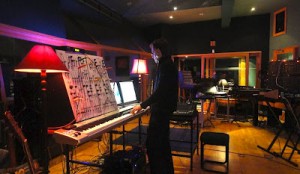
The group will release their first album in 17 years, following up from their self titled debut album in 1995. Alongside this they will run a Pledge Music campaign where fans will be given the unique opportunity to be part of the creative process as well as having the chance to purchase exclusive merchandise and content and receive the album before anyone else.
Click on the link below to visit the Node website where you can keep up to date with all the latest news, listen to music and be the first to hear about the launch of the pledge campaign.
Mixed In Key Launches “Mashup” Audio Editor for Fast Mashup Creation
The software developer Mixed In Key, known for its popular Mixed in Key 5 harmonic mixing analysis tool, announce that it has released Mashup for Windows and Mac OS X.
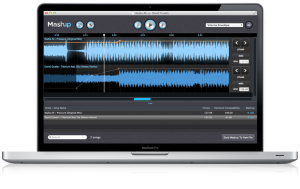
“Mashup” is a purpose-built audio editor that makes it significantly easier to do, you know, MASHUPS.
Mashup (available for $39 with free updates until Version 2.99) is a new audio editor designed to let DJs and music producers quickly and easily beatmatch two or more audio files, edit them, and then save their results to a new audio file. Mashup uses Mixed In Key 5’s harmonic algorithm to find compatible songs, making the process of mashup creation extremely simple.
According to Mixed In Key’s president Yakov Vorobyev, the company’s goal with Mashup was to allow users to create a mashup in five minutes or less, and to make the process easier than it currently is with Ableton Live.
Mashup’s user interface is intended to be streamlined and intuitive. When users import songs into Mashup, it will analyze them for key and tempo. Next, when a song is dragged into Mashup’s audio editor, its tempo will become the master for the project (or users can manually enter in a different master tempo).
Once a song is added, Mashup’s song browser will show users which other songs in their collection are 100% harmonically compatible with their original song. Then other songs can be dragged into the editor window, where they’re automatically beat-matched to the master tempo, using Mashup’s professional time-stretching algorithm.
From there, Mashup lets users graphically edit each song’s volume, as well as three bands of EQ, with breakpoint-style automation. The editor also allows users to select and silence portions of songs, adjust phase, slide them in time, and more.
When editing has been completed, the results can be exported to a 320kbps MP3 file or a 16-bit, 44.1kHz WAV file.
For users who have already installed Mixed In Key 5, Mashup will load its database and skip the analysis step. Mashup and Mixed In Key 5 work seamlessly with each other.
The Quartet Test
Machinedrum supplies percussion and master clock source.
PP controlling E340 thru various filters to create lead sound. Bass from AFG sequenced by Modcan Touch sequencer. Sport Modulator and Quantimator controlling MFB triple Osc to created randon slewed chord sound. 2x Ulfo’s FM’ing each other thru a LGP controlled by A155.
Other stuf fgoing on but you get the idea…short sharp and to the point!
Gameboy type samples – Noizedrumz Vol.2 [nanoloop] for NI Maschine & NI Kontakt
Noizedrumz vol.2 [nanoloop] for NI Maschine & NI Kontakt
Free download at: http://www.noizefield.com
Features:
* all samples created with a nintendo gameboy running nanoloop
* recorded and mastered with DBX 386, Cubase 5, Adobe Audition
* 918 Samples
* 24Bit, 44,1kHz, wav
* all samples available in stereo and mono
* 6 nki instruments vor Native Instruments Kontakt (v. 4.2.4.5316 and above required)
* 5 nki BooTweak instruments vor Native Instruments Kontakt (v. 4.2.4.5316 and above required)
* 9 drum kits for Native Instruments Maschine
* ready for Native Instruments Maschine
DATAMASKIN

