
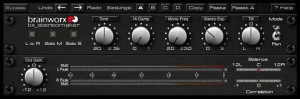
bx_stereomaker plug-in creates a virtual S signal with analog style filters
Make Any Mono Signal Stereo –
Brainworx lets us know that bx_stereomaker creates a virtual S signal with analog style filters using advanced digital science. They say that you can solo this virtual S signal and that bx_stereomaker will enhance any mono signal to stereo, while allowing you to balance the center of the stereo signal and paying attention to the frequency range of your signal.
A spokesperson told us, “We call this release a ‘public beta’ just like we do with all brand-new plugins. We always test our plugins internally, of course, but with almost countless different setups out there we cannot test every possible setup. This release is an unlimited fully functional version and can be tested and bought from now on.”
Pricing and Availability:
$95. ($129 after September 15)
More information:
EMW-200 & EMW-300 VIDEO
EMW-200 and EMW-300 demonstration. No external effects or processing of any kind on this video.
30 years has gone since Yazoo’s Upstairs at Eric’s hit the stores – Interview
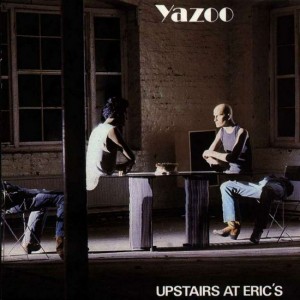
On the 30th anniversary of its release, Vince Clarke tells John Freeman how Yazoo’s groundbreaking debut album was all about “the singing and the tunes”.
Excerpt from the interview:
What were your first impressions of Alison?
Vince Clarke: By the time Alison and I started working together I did kind of know her. I’d seen her perform in a couple of local R&B bands and a punk band [The Vandals], so I knew she had a great voice. When I finally got to meet her I found her to be incredibly shy, which was opposite to her personality in this particular punk band.
What was it about Alison that made you want to work with her?
VC: Well, I only had one song, ‘Only You’, which I wanted to demo and that was the sole purpose of hooking up in the first place. I knew that she could sing with a lot of emotion and this particular track was a love ballad. I was looking for someone who could put that across.
What was that very first practice session like?
VC: It was great. We were using this tiny four-track tape recorder and I had the backing track already done. She came around to my flat in Basildon and just sang it in one or maybe two takes. The song wasn’t particularly challenging for someone of Alison’s abilities. But immediately in the recording there was this sense of seriousness and almost pathos – it was a really great performance.
You then played ‘Only You’ to Daniel Miller at Mute and he wasn’t immediately impressed. I’ve read that you were pretty close to quitting music at that point. Was that the case?
VC: Pretty much. When I first played the track to Daniel I had gone to his office and he was busy messing about with a synthesizer, as usual, and he didn’t seem to be particularly interested. I did think to myself that that was the end of my musical career and I’d need to get a proper job. But that the same evening, the publisher came into the office and he was with a load of other publisher associates and they heard the track and were really enthusiastic about it. That possibly influenced Daniel’s opinion.
As you began to create songs for Yazoo, did your songwriting change compared to how you’d written previously for Depeche Mode?
VC: No, I don’t think my writing changed. Hopefully my songwriting was getting better but I wasn’t writing songs for Alison’s voice per se, I was just writing what I thought at the time were quite good songs. I knew that Alison had some ideas for songs as well – she plays piano better than I do – so we just came together and it was a bit of a mish-mash really. There was no concept or theme running through the album; we were just messing about in the studio.
Part of the charm of that album is a naivety. There really wasn’t a profound concept that was running through the recording. I didn’t really know what I was doing in the studio and Alison hadn’t much experience of being in a recording studio, so everything was new. We’d make one sound and we’d think it was great and just stop there and wouldn’t make any more sounds. It wasn’t like we were continually honing or over producing songs because everything at the time sounded fresh. That’s why a lot of the tracks only have eight or nine elements to them.
The title of the album refers to the studio in which you used. What are your memories of the recording process?
VC: We were recording at Blackwing Studios where I recorded the first Depeche Mode album. It was the only studio we knew and the engineer, Eric Radcliffe, was – and is – fantastic. Back then, Blackwing was the studio that Mute were using for all their artists so Fad Gadget was recording his second album at the same time. He was doing the regular hours of 11 in the day until 11 in the evening and so we would get there at about five or six in the morning and just do that early shift.
Ouch.
Read the full interview here >>
Doepfer DIY Synth – Silent way – Ableton Live
A new video by Keram featuring his DIY Doepfer synth:
My Doepfer DIY Synth.
I am using Silent Way( Step LFO) in Ableton with some drum loops, with Motu Ultralite , using Y cable. One side( tip) of the cable Y cable is driving the CV of the oscillator another(ring) is modulating the cut of of the frequency of the filter.
It is a first video using Sony HDR XR-500 camera using camera build in microphone.Enjoy!
Reason rack Extension: Radical Piano Sound Examples
In this video the Propellerheads will walk you through some of the sound sculpting potential in Radical Piano, a new Rack Extension available for Reason 6.5.
http://shop.propellerheads.se/product/radical-piano/
More Info:
Radical Piano gives you three sampled pianos paired with the technology to make an infinite number of your own. Thanks to its blend between sampling technology and physical modeling, Radical Piano is a lightweight, flexible, and bendable piano instrument that provides sounds for every situation and every song, from ultra-clean to creakingly natural — and beyond.
With Radical Piano you can do things that are otherwise impossible; not only in multi-gigabyte sample libraries but even in the recording of actual acoustic pianos. Do you wish your close mic’d grand piano sounded just a little bit more like a vintage mono upright piano? Use the microphone blend to create a hybrid sound. Route audio, like a vocal, through the jacks on the back of Radical Piano to hear it resonate the strings as if you had recorded piano and vocals together live, in the same room. What if with the turn of a knob you could transform the tonal characteristics of your piano, shifting from a soft intimate performance to a bright aggressive instrument that will cut through your mix? We’ve got that knob and it’s called “Character.”
Features
– Three pianos: Home Grand, Deluxe Grand, and Upright
– Choose a blend of vintage mono, ambience, floor, jazz and close mics
– Go from horror movie soundtrack to sharp cut-through-the-mix piano with the Subdued and Agitated Character settings
– Adjustable velocity response puts you in control of the performance — play quietly or with exaggerated dynamics
– Set the amount of resonance, and key and pedal noises you want for a natural or surgically clean sound
– The built-in EQ, reverb and compressor lets you tweak your sound further to sit perfectly in the mix
– Tons of preset sounds included — Pianos for every situation and every song
JUPITER-80 demonstration by Bernie Smith from Take That
Here’s a new demo of the Roland Jupiter 80; Bernie Smith is not your average session musician. Being the synth and piano man for acts like Annie Lennox and Take That need a special kind of musician. It’s a good job that his Jupiter 80 is not your average synth.
To find our more about the JUPITER-80 go to:
http://www.roland.co.uk/products/productdetails.aspx?p=1165#.UDVgudZmTYg
Native Instruments: Traktor HID Integration With Pioneer
More news on Traktor integration with Pioneer. It’s never been easier to set up Traktor in the club. The latest 2.5.1 software update provides plug and play usability with Pioneer’s CDJ Series (2000/900/400) and DJM-900 Nexus Mixer, thanks to advanced HID support. Use the CDJ to access tracks, cue points, loops and more in Traktor, with all relevant information on the CDJ’s display – from track artwork to detailed waveform displays.
This integration gives CDJ users access to powerful features such as Traktor’s Remix Decks, sync, superior cueing and looping, intuitive browsing and world class effects. Traktor memorizes your settings, so every DJ booth becomes your DJ booth, no matter what equipment is installed.
More information:
http://www.native-instruments.com/traktor
Music by:
Technasia – Heart Of Flesh (Cadenza 78)
http://www.facebook.com/Technasia.Official
Ian Tricus – Your Love (Unreleased)
http://www.facebook.com/iantricus
Performing live with MIDI hardware and Ableton Live
Background information:
I frequently receive questions about my music setup and how I connect and record the various instruments, when filming my “Synth Jams”. This video gives you an overview of my workflow, and hopefully inspires you to design your own live performance setup. If you have further questions, post them underneath the video, or write me a message. Of course I’m also interested in how you make music, so go ahead and tell me about your setup or link me to your own audio/video on the internet. 
SoundCells releases Boost 309 Version 4 – redefine your beat making!

“Boost 309 v4” is based on the complete sample set of the vintage, lo-fi but charmingly sounding machine Rave-o-lution 309 by a company named Quasimidi. Soundcells has created 100 brand new combinator drum machines for you with these samples.
It all ranges from the old original 309 thing to amazing and unique patches that could have never been created within the 309 itself. Besides cool beats and complex, crazy rhythms Boost 309 will offer the user even more! Version 4 is an awesome update which adds 20 combinator patches: 5 combinator drum machines (plus their 5 shuffled counterparts) & 10 great playable combinator synth patches. Not to forget about the new Kong & ReDrum kits..
Boost 309 version 4 Contents:
• 230 combinator patches in 4 folders: Bass, Leads, Pads, Polyphone Synths.
• 100+ NNXT patches, 20 Kong kits, 26 ReDrum kits and over 300 samples from the original 309.
• 60+ rex loops making use of the “Boost 309” drum machines as also the original machine.
• 5 tracks in RNS format – inspiring with highly ‘tutorialesque’ value.
Offering price per Unit is 19.90 ,- EUR (normally 29,90 ,- EUR)
Modulations for Bob
Description:
Thinking about Bob Moog on the anniversary of the founding of the Bob Moog Foundation, so I cranked up some synths and modulated some filters in his honor. www.moogfoundation.org
DATAMASKIN

