
Two new fresh electronic songs from M83 and Miss FD
The video is a “Double Feature” with all footage edited and cut from “Amelie” and the music from M83. The first song is “Steve McQueen” and the second is “Midnight City.”
Out on November 27th is the newest M83 single “Steve McQueen”. This is the third single from the Justin Meldal-Johnsen (Beck, NIN, The Mars Volta, Goldfrapp) produced “Hurry Up, We’re Dreaming” album.
The single will be released with remixes from Alluxe, BeatauCue, MAPS and SALM, alongside the new video, which will be chosen shortly from submissions to the Genero.tv competition.
Music video by Miss FD performing “Down in the Dungeon”
(c) 2012 Quantum Release Records
Miss FD online:
http://www.MissFD.com
http://www.facebook.com/MissFDMusic
http://www.twitter.com/MissFDMusic
Expand your music arsenal with these new releases
Free 30-Band Graphic Equalizer
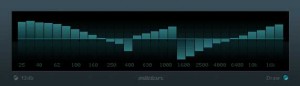
Mildon Studios has released a free 30-Band Graphic Equalizer VST plug-in for Windows with a look that blends perfectly with Cubase.
Pricing and Availability:
Free download
More information:
AudioThing has released TX-101 for Native Instruments Kontakt
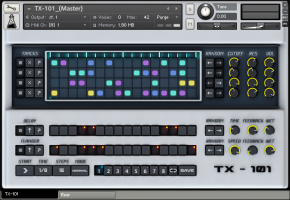
TX-101 is a 4-track sequencer designed for the creation of evolving rhythm patterns. Each track has 4 different samples (for a total of 16 samples), including organic glitches and metal hits. It is possible to store eight presets that can be joined and looped together to build a 128 steps sequence (16×8). It is also possible to sequence Delay and Flanger effects as two additional tracks. Both parameters (cutoff, resonance, effects) and steps can be randomized separately.
There are 6 different variations (.nki instruments) of TX-101 for different mood/styles. The modulation wheel is also assigned to a different set of parameters for each instrument.
Details:
- Sequencer: 4 Tracks and 16 Steps + tracks for Delay and Flanger.
- 8 Patterns presets.
- 6 Kontakt Instruments (.nki) presets.
- Mod. Wheel assigned to different parameters for each preset.
- Size: 16 MB installed / 9 MB Download.
Price: $18. TX-101 is available for the introductory price of $14 until October 11th, 2012.
Native Instruments Kontakt 4.2.4+ full version is required.
Cableguys Curve 2
Curve 2 out now!
FULLY FUNCTIONAL DEMO: http://www.cableguys.de/downloads.html
MORE INFO: http://www.cableguys.de/curve.html
Curve is a software synthesizer with an irresistible waveform editor, huge sound library and slick interface. Ideal for both experimentation and detailed tweaking at an excellent sound quality.
• Sound Features – Curve features aliasing-free oscillators with custom waveforms, noise generation and broad FM options. Waveform crossfades provide for changing timbres; a comprehensive unison mode delivers fat lead sounds, wide pads and massive sound. Drawable LFOs deliver everything from melodic and rhythmic patterns to dubstep wobbles and punishing bit-crushing effects. Flexible filter routing, a feature-rich mono mode plus legato and glide, are all designed for great depth of control.
• Preset Library – Curve’s preset library is a shared online database, providing a constant source of inspirational sound. Public preset sharing allows an ever-increasing number of great presets, public preset voting will help you manage the vast number of sounds, all from within the plugin. Curve ships with an excerpt of this ever-growing sound library. Macro knobs let you explore vast sound variations quickly, for quick access to those parameters that define the core of a sound.
• Elegant Interface – Curve shows you everything important at a glance, featuring high contrasts and a fresh color scheme. Inbuilt MIDI assignment allows you to set up external MIDI controllers quickly.
• Curve Community – Since the first beta of Curve 1.0, the Curve community has steered the synthesizer’s future by submitting feature requests, comments and bug reports, and by sharing presets. Curve 2 is the result of our users submitting wishes and uploading great sounds. Big thanks to all of you!”
Nice synth watch accessory :-)
Needless to say – you cannot actually play it (as we have been informed), but still – pretty nice watch

Boomstar 4075 synthesizer demonstration – teaser
Studio Electronics Boomstar 4075 – ARP Filter Sneak n’ Peak (Take 2)
Get the .aif.zip here: http://studioelectronics.com/assets/Audio/boomstar/Boomstar-4075-GSR-1.aif.zip (for you listening pleasure only).
Greg St. Regis’ clever twists and turns launched the first 4075 Boomstar past “the surly bonds of earth,” via a cheap audio interface that happened to be around. More Boomstar filter type demos, live footage and markedly superior D/A Converters to follow.
Headphones mandatory. Production units are mere weeks away!
MSR
Greg St. Regis comments:
We’ve spent the last month debugging the prototype pcbs and perfecting the analog circuits. At this point, I felt it was good enough to give you all a sneak preview of the sound. It has about 90% of it’s hardware functional. Still to be implemented is the software LFO. This is raw BoomStar recorded though a Focusrite Scarlett interface (nothing special), into Reason with a Macbook Pro. We did this in about 20 minutes, one take. I played a small Akai controller with a built in arpeggiator with my left hand and turned knobs with my right. It’s “kinda cool.
It was originally about 11 minutes long; Marc did a small amount of normalizing and edited it down to 8 minutes 30 some seconds.
Put some decent headphones on and listen to huge low booms end and searingly crisp filter sweeps. I tried to take it though a full compliment of waveforms, xmod, rmod, oscillator sync, feedback looping, resonance squeals and overdrive. There is quite a bit more to come when the LFO gets in on the action.
The chassis are getting screened this week. We’ll post more demos in the days to come with video included. And no, this is not an SE1X or ATCX! They sound quite good, but there is nothing like the clarity and impact of pure discrete analog with hardware envelopes.
Enjoy!
GSR
p.s. Expect to see these in the shops in about 30 days… we’re in love with this little beast.
Previous MSR comments:
“Four Boomstar hardware circuits: crossmod, ringmod, feedback, AND distortion are at play here at one time or another. The idea was to stretch out… and let things get greasy and messy.”
“The “feedback” feature (a la the Minimoog) is employed throughout this track so that distortion is an effect. If you are attempting to listen to this through your laptop speakers they will be overwhelmed quickly.”
Fox Hunting – Made Of Gold (Technicolor)
Made Of Gold (Technicolor) is the second single release from Masquerade. The single is released on iTunes and Spotify October 3rd, including additional remixes by Monostrip and Fox Hunting.
Directed by Peter Pahlman
Produced by John Morgan Studios and Pontus Gustavsson
http://foxhunting.se
http://spokedigitalagency.se
Ultravox 2012 Tour – Soundcheck chat
Exclusive soundcheck footage and a brief backstage chat with Billy Currie and Chris Cross during the Ultravox 2012 Brilliant tour. Billy and Chris talk about their use of VSM, Oddity, Minimonsta and impOSCar2 to recreate the keyboard sounds from both their classic and more recent tracks in the live shows.
www.ultravox.org.uk
Forest and Trees – experimental sound installation
“Forest and Trees” is an installation of moving images and sounds employing 12 digital photo frames.
The animation and its sound effects playing through the internal speakers of each frame gradually
come together to form music.
This work will be exhibited at Museum of Contemporary Art Tokyo.
“Search for New Synesthesia”
mot-art-museum.jp/eng/schedule.html
This video is list version for vimeo.
Noodling & Just An Illusion with Minimoog and Emulator
Here’s a new video noodle session from SynthMania:
“A quick noodling session with Minimoog, Emulator, LinnDrum. Again, my audio interface is being exchanged and I’m using the computer’s internal card, so apologies for the noise floor. The Emulator going out of tune in a couple of parts is because I inadvertently moved the pitch bend wheel with my elbow :-D”
Time machine: Oberheim OB-X “1979”
All sounds self-programmed: Oberheim OB-X Analog Synthesizer from the year 1979
recording: multi-track without midi, sequenced by the SCI Pro-One step-sequencer over CV/Gate and synced with the TR-808.
drums: Roland TR-808
fx: a little bit delay and reverb
more info: http://www.retrosound.de
About the synth:
The Oberheim OB-X is an analog polyphonic synthesizer first commercially available in June of 1979 . It was the first Oberheim synthesizer that was created with internally pre-wired modules (albeit still mostly discrete circuits) and not with the earlier, unwieldy S.E.M.s (Synthesizer Expander Module). Because of this, it was more functional for live performance, and more portable. It was hurriedly introduced to compete with competitor Sequential Circuits’ Prophet-5, which took the industry by storm during the prior year. While the OB-X had moderate success in the limited numbers produced (aprx. 800 units), the design was quickly updated and streamlined with the OB-Xa; the OB-X being discontinued in 1981.
Originally, the “X” in OB-X, stood as a variable for the number of voice-cards – thus, polyphony – installed. Whereas earlier Oberheim modular systems would require multiple S.E.M.s to achieve polyphony, the OB-X condensed the S.E.M. down onto a single printed circuit board called a “Voice Card”. Using this method, along with the Z-80 microprocessor to program the cards, the OB-X was far less laborious to program than it’s ancestors. It came in four, six, and eight-voice models. The starting price for the base model of only 4 voices of polyphony was a steep US$4,595. Besides the generous polyphony, each OB-X came with a memory capable of holding 32 user-programmable presets, along with polyphonic portamento, and polyphonic sample and hold. Also, a first for Oberheim’s polyphonic range were the “paddle” levers for pitch and modulation. This was Oberheim’s answer to the then standard “wheel” style controls seen on the Sequential Circuits Prophet-5. The OB-X would be used by artists such as Nena, Rush, who used it extensively on “Moving Pictures” and “Signals” Queen, being the bands first Synthesizer to appear on an album Prince, who swore by the Oberheim OB line, and Jean Michel Jarre who used it for it’s massive brass-type sounds. The OB line of Synthesizers developed and evolved even after the OB-Xa with the OB-8, and finally the Matrix series of synthesizers.
SonicProjects have created a VSTi emulation of the OB-X, for Windows and Mac platforms called the OP-X, with near-identical sounds to the hardware version. Widely praised as the most accurate emulation of an Analog Polysynth, SonicProjects include multiple versions of the OP-X including two “Pro” versions.
Looking for Daniel Miller’s drum sounds – look no further

DM ARP 2600 Drums is a free Live Pack consisting of 8 Ableton Drum Racks and 150 original analog percussion sounds sampled from Daniel Miller’s own ARP 2600 modular synthesizer. Extensive controls for real-time sound tweaking and bonus sequence clips are included.
Beginning with his now-classic “Warm Leatherette/T.V.O.D.” single (as The Normal), Daniel Miller and the Mute label have been at the cutting-edge of electronic music for almost 35 years. Singular artists such as DAF, Fad Gadget, Depeche Mode, and Erasure began their careers at Mute and pioneers such as Can and Cabaret Voltaire enjoy their canonical status in no small part thanks to Daniel Miller’s expert curatorship of their archives.
Ever the inquisitive experimentalist, Daniel Miller continues to produce with a finely honed ear, merging the best of analog synthesis with new music technology that provides the creative immediacy he demands. Made in collaboration with the Flatpack sound design team, DM ARP 2600 Drums delivers a large selection of drum and percussion patches created with Daniel Miller’s own ARP 2600 modular analog synthesizer. Carefully sampled and programmed, this free Live Pack delivers Drum Rack Instruments with Daniel Miller’s characteristic touch.
DM ARP 2600 Drums includes Macro controls to quickly and intuitively alter the overall sound of each kit as well as individual characteristics of the kick and snare sounds. Further customization of individual sounds as well as of effects and presets can be accessed via the Drum Rack’s Chain and Device buttons. A detailed walk-through of all the customization options can be accessed via Help View in Live’s main menu.
DATAMASKIN

